Not long ago, I went back to my grandmother’s house to celebrate her 87th birthday. After lunch, my mother and I set off toward the old home where she had grown up. A thin winter rain was falling, Chongqing rain, slow and endless, soaking into the skin. The cold there is not sharp but seeping, damp and marrow-deep. Stepping into the old house felt like slipping into an ice cave. Even outside, the air was bitter, heavy, with no wind, yet colder than stillness should allow.
I walked close behind my mother. The house was a courtyard dwelling built on a slope, the yard tilted downward, once used for drying grain. As a child, I often played in its abandoned spaces, climbing trees, scrambling onto rooftops, roasting sweet potatoes in a small fire, building tents out of rags and sticks where my friends and I would play at lives far beyond our own.
My mother looked around the ruins and sighed.
“As a child, this courtyard felt enormous, and the rooms unending. Now it just looks so worn.”
She told me how, as the youngest child, she had lived in a little room in the northwest corner. Carefree. Each dawn she would run along the country paths to the main road, past the grain depot, and back again. Running carried her forward: into the school volleyball team, into competitions, and eventually all the way to Beijing for university. She remembered the banquet tables her family set here to celebrate—dozens of them crowding the courtyard and spilling into the rooms. “I don’t know how we fit them all,” she said.
I tried to picture her at eighteen, nineteen, in 1989—a year that feels, in retrospect, like a hinge in history.
As a child, I would pore over her university photographs. What struck me most was her smile—bright, carefree, unguarded. She still had a round face then, broad shoulders, permed curls, sometimes hidden by oversized sunglasses. At twenty she favoured slouchy sweaters, striped T-shirts, polka-dot skirts, pale jeans, padded jackets (the uniform of her time), which somehow feels timeless. In photo after photo she is drinking beer with classmates, traveling to nearby hills and lakes, or performing gymnastics at the opening of the 1990 Asian Games in Beijing.
I didn’t see Beijing until I was eleven, but long before then my mother had already taught me the city through those pictures:
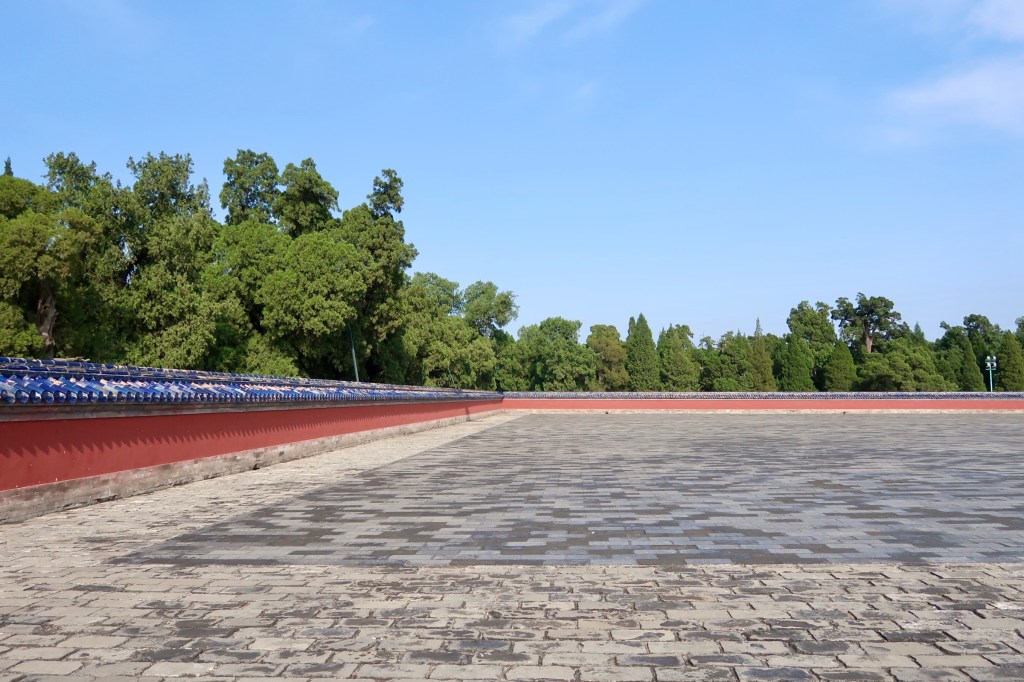
“This is me rowing in Shichahai. Here we are at Fragrant Hills. This is the Temple of Heaven. That’s the Great Wall. Those are the broken columns at Yuanmingyuan.”
So when I finally arrived, I felt a strange déjà vu, as though I had lived there once before.
Perhaps what I loved most in those photographs was that my mother looked so happy, so different from the mother I knew. For much of my childhood I believed she did not love me, perhaps even disliked me. She reserved her warmth for her students. For me there were only criticisms, strict instructions, a tone that always seemed impatient. She rarely smiled at me. And so, the girl in those photographs: youthful, blooming, alive, felt like someone I longed for, someone I almost wished had been my mother instead. Along with Beijing itself, she seemed radiant, full of promise, familiar yet unreachable.
I imagine the Beijing of the late 1980s, though I never lived there, must have been the best Beijing since the founding of the republic: skies of clear blue, sunlight through the shadows of hutong trees, ancient gates, wide boulevards, seas of bicycles, young men and women in sunglasses and jeans. All of it captured in the photographs I grew up with.
When I was six, my father taught me to swim by tossing me straight into the water. Soon enough, I managed. Ever since, I teased my mother for being afraid to swim. “You’re a PE teacher! How can you not even get in the water?” I’d gloat, diving under to show off. She would reply seriously, “I was supposed to take swimming in college, but half a year of student movements ruined everything.”
“What movements?” I asked. She would never answer.
Years later, in a high-school history book, I saw a brief, passing mention. And then I understood. At that age, the less I could find in writing, the more curious I became. I asked her again. She avoided me. I told her what I’d learned, how many had died. “That never happened,” she said sharply. “Don’t believe what people say. It was just foolish students, being manipulated.”
Later, when I studied in the UK, I encountered so much more, films, interviews, memoirs, novels. Everything I read contradicted her words. Should I believe the one who had lived it? Or the weight of evidence that said otherwise?
Eventually, I asked again, carefully. And at last she spoke. What she told me confirmed what I already felt: that the 1980s were, perhaps, the last truly open and promising decade in China’s recent history.
I imagine her at twenty, standing shoulder to shoulder with other young people, full of restlessness and conviction, raising their voices for themselves, for their country, for everyone. Whether incited or self-driven, it didn’t matter, they believed they had power. They believed change was possible.
And what of us, in our twenties? We escape, we retreat, we compromise. We live “Buddha-like,” or obsessed with wellness. Our eyes shrink to the size of a well’s mouth. Those who truly care, who dare to see beyond the horizon, are sanded down again and again until their edges disappear. Perhaps this erosion is exactly what is intended.
I sometimes joke that I wish I could trade places with my mother, just once. To be twenty in the late eighties. To wear oversized sweaters, to climb the Great Wall and shout, “I love this world!” To hear a Beijing rock concert, to sit through a marathon of strange cult films, to watch an experimental play. I know history cannot be rewritten. But if I had lived that summer, I would have taken countless photographs, written endless diary entries, recorded every cry, every song, every restless heartbeat of that milestone season.
Yes, it is an idealist’s nostalgia—longing for a time that was never mine, a time I never lived. Perhaps it was cruel, ugly, dark, poor, sad. And yet I cannot help but yearn for it. Even my parents sometimes say, “Back then we didn’t feel much. But now, looking back, the environment really was better.”
I know I can’t spend my life complaining about my own era, or romanticising another. To others I might seem nothing more than a champagne socialist. And yet, I wonder, when our generation reaches middle age, what will we have to show? It seems all the opportunities, all the turning points, belonged to theirs. Can we do better? I’m not sure.
For much of my childhood, I believed my mother didn’t love me. She didn’t cook for me, didn’t clean my room, didn’t give me pocket money. She barely came to school events, not even parent-teacher meetings. What she did give me was strict discipline, constant criticism, endless tasks.
And yet, she always supported my choices. She encouraged me to write, to watch films, even to idolise celebrities. She never told me what to become. She only wanted me to live freely, to live happily, to follow what I loved, just as she did. Ideally, not to chain myself to an office desk.
Looking back, I realise this was enough. I loved the independence she gave me, her refusal to let motherhood consume her: I love my child, but she is not my whole life—this was her silent creed. Now that she is older, she has grown a little softer, more talkative, even dependent on my advice. And I, through this slow transformation, have grown into someone with my own will, my own centre. This is exactly what I wanted.
Now I understand that was its own kind of love. She showed me how to carry myself with a stubborn brightness, even in the shadows. And though I once swore I would never be like her, the truth is I want to inherit the best of her: her courage, her refusal to bend, her way of standing firmly in the world.
So let our parents rock, because once, in their twenties, they already did. And if I think of my mother standing on the Great Wall in the summer of 1988, smiling with all the light of youth, I know I will always remember it as my mother’s brightest summer.
 Tu Yao 涂遥
Leave a comment